September 30, 2026
A Forest You Can Get Lost In
The hunt map got its first atmosphere pass: moonlit fog, a cold blue moon, nights that stay dark, and ground that answers to the kind of hunters you have been.
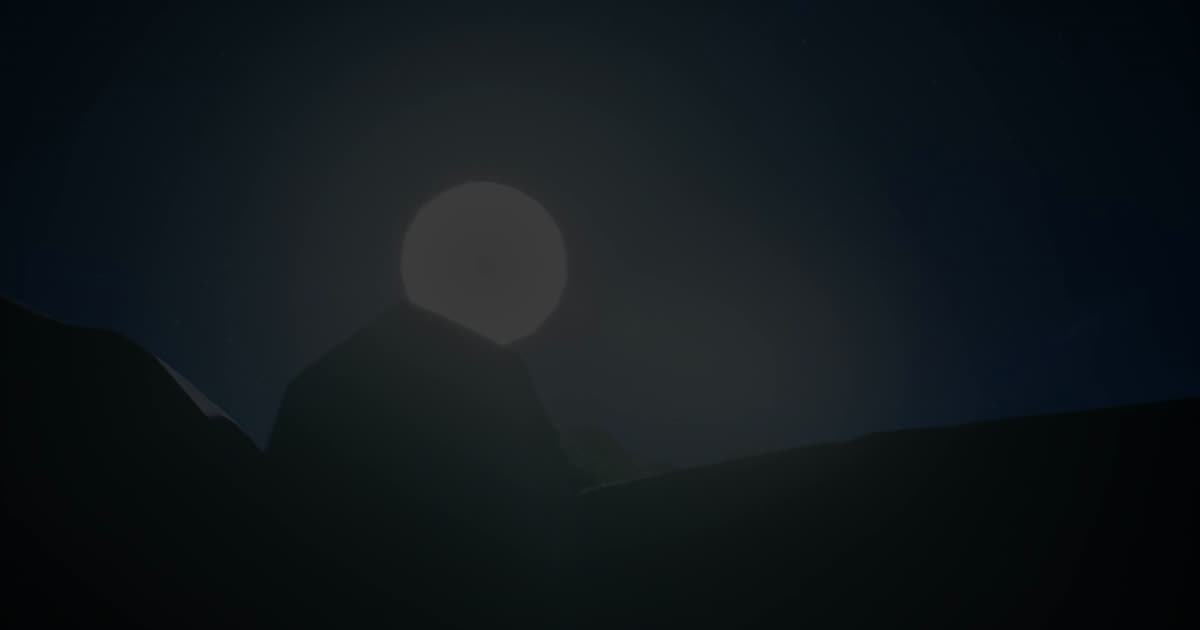
Most of our early work on the hunt map was about systems: where evidence spawns, where the creature can go, how the camp works. The forest itself was a test field with trees in it. This update is about the pass that started turning it into a place, and about the rules under the ground that make one walk through it different from the next.
Fog that lets the light in
The first thing we fixed was something we had been staring at for months without naming. The map's two layers of fog were absorbing light instead of scattering it. At a distance, everything faded to black, so the forest felt like a small lit room with a void around it rather than a large dark place with a moon over it.
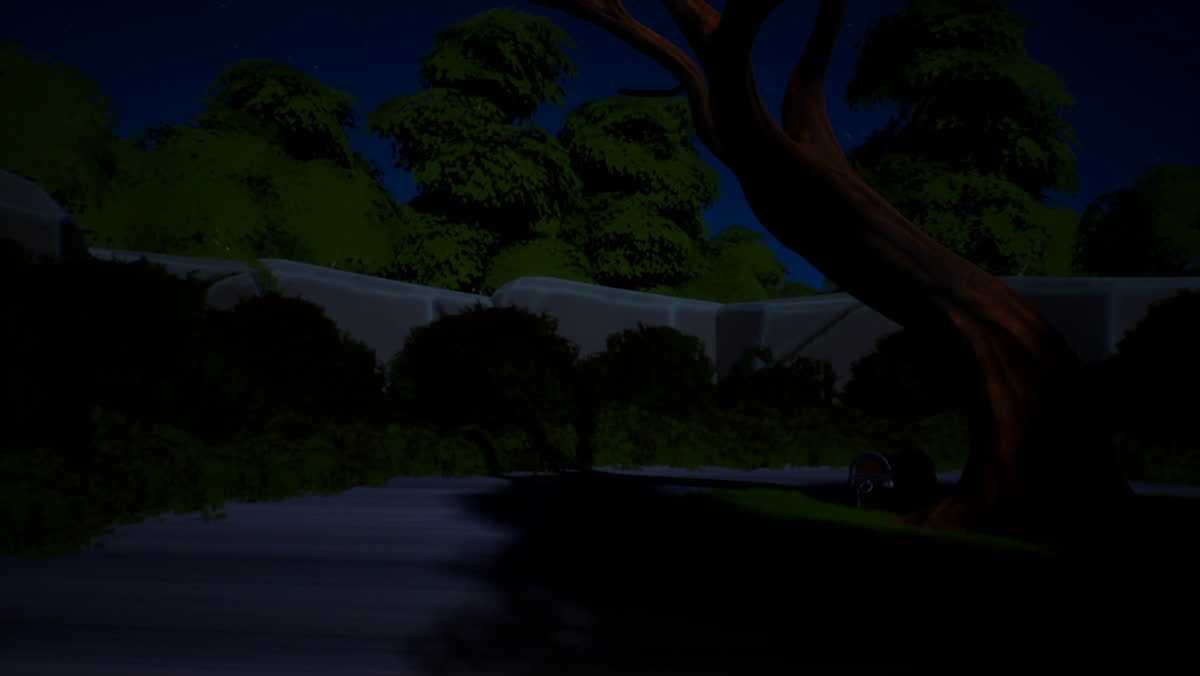
Both layers now scatter a cool blue-grey, and both are far thinner than they were. The volumetric layer dropped to a fifth of its old density and the base layer to about an eighth. Distance now reads as distance. You can see the shape of the far tree line, the mist over the water, and the gap in the canopy where a clearing is, and that is exactly the information a hunter wants when deciding which way to walk.
A cold moon and a night that stays night
The moon light was red-pink before this pass. It looked dramatic in screenshots and wrong in play, and it was spending a colour we need. A red horizon is one of the omens in our evidence matrix, the sky's way of hinting at a particular creature, so an ordinary night cannot be red. The moon is now a cold blue, a touch brighter, and it scatters through the fog so you get visible shafts of light between the trunks.
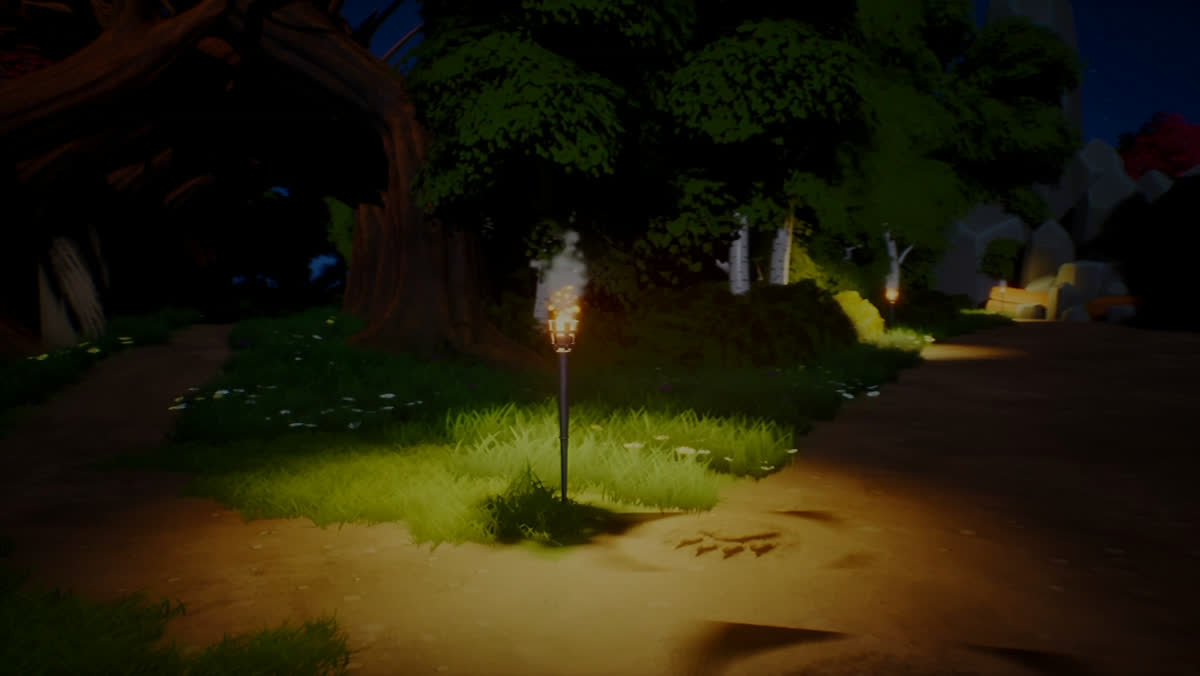
We also clamped the camera's auto exposure. Left alone, the eye adaptation would slowly brighten a dark scene until midnight looked like dusk, and every torch and lantern lost its meaning. Now night stays night. A torch is a pool of warmth with real dark past its edge, and the difference between walking the road and stepping off it is something you feel.
Ground that remembers what you did
The map is now divided by morality, though nothing in the world tells you where the lines are. There are six places the creature can make its den. Two sit near the camp and are favoured when the party's reputation is clean. Two are neutral. The last two are deep in the far side of the map, and they pull hard on a party with blood on its hands. The deepest is the lair, weighted heavier than anything else.
So hunters who have been decent to the town tend to find a shorter, closer hunt. Hunters who have not are drawn into the worst ground the map has, and that ground fights back. Two invisible volumes cover the far clusters. Step into the evil ground and the creature's threat jumps, then keeps climbing for every second you stay. Step into the lair and it jumps again. The extraction carriage works the other way: its patch of ground is a safe zone the creature is not allowed to touch, and nothing is ever hidden inside it. It is a small set of rules, but together they mean a hunt's geography is a consequence of your choices, not a fixed layout.
Loot follows the same gradient. Five chests run from the camp toward the lair, so the best of what the forest holds sits in the ground you least want to be standing on.
Flying through it
To review all of this without walking it a hundred times, we built a scripted camera that flies a fixed route through the map: camp, road, the pool, the moon over the ridge, the water, and finally the creature. The images in this post are frames from it. It doubles as a way to check any atmosphere change in a few minutes, which is how we caught the fog problem in the first place.
What's next
This was round one. The map still has a working title and more than one spot where the ground trace lands on a boulder instead of the dirt. The next passes are about sound, so the listening horn has more to catch in more places, and about making the evil ground look as bad as it feels. And the town, which has been a placeholder for a long time, is due for the same treatment.