October 22, 2026
Dressing the Town
The town hub now reads your morality: greenery and bunting for a good town, bare ground and thorns for a cruel one, and chimneys that only smoke on houses you have actually built.
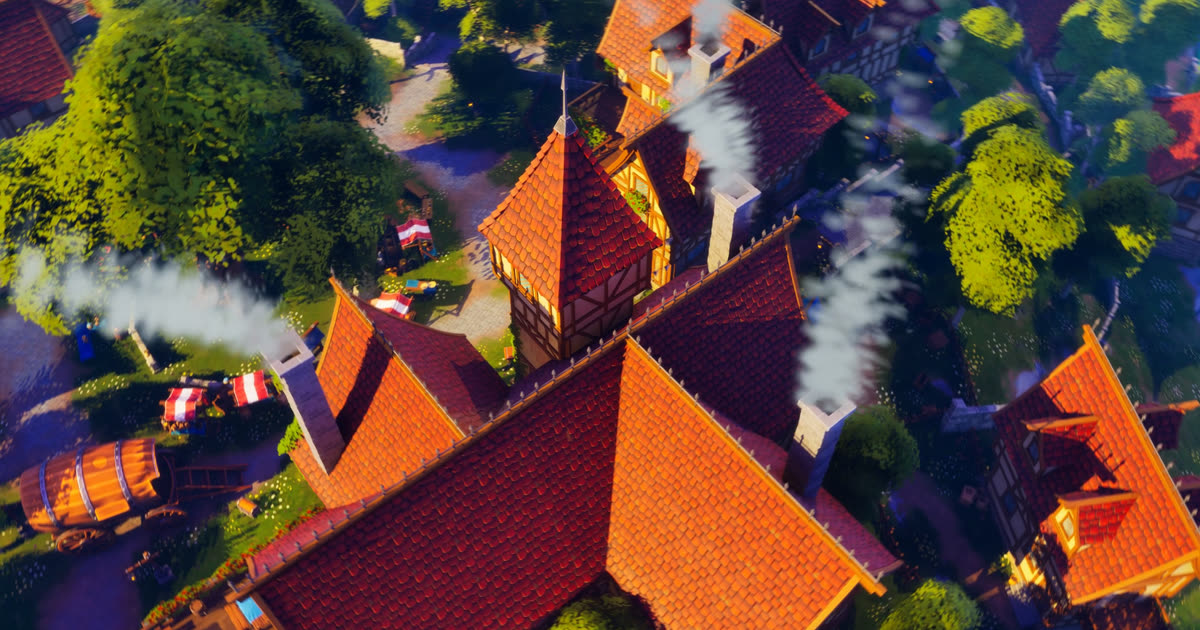
The town is where every hunt begins and ends, and for a long time it was the least finished part of the game: a stand-in village we use for demos, with placeholder buildings and props that floated a hand's width above the ground. This sprint did not rebuild it. That comes later. It made the town we have respond to the player, and cleaned up the mess.
A town that shows what you have done
Morality in The Last Fairytale is a number the whole town carries, moved by what you do on hunts: who you spare, what you steal, whether you rob a shrine. Until now you could only see it on a page. Now you can see it from the road in.
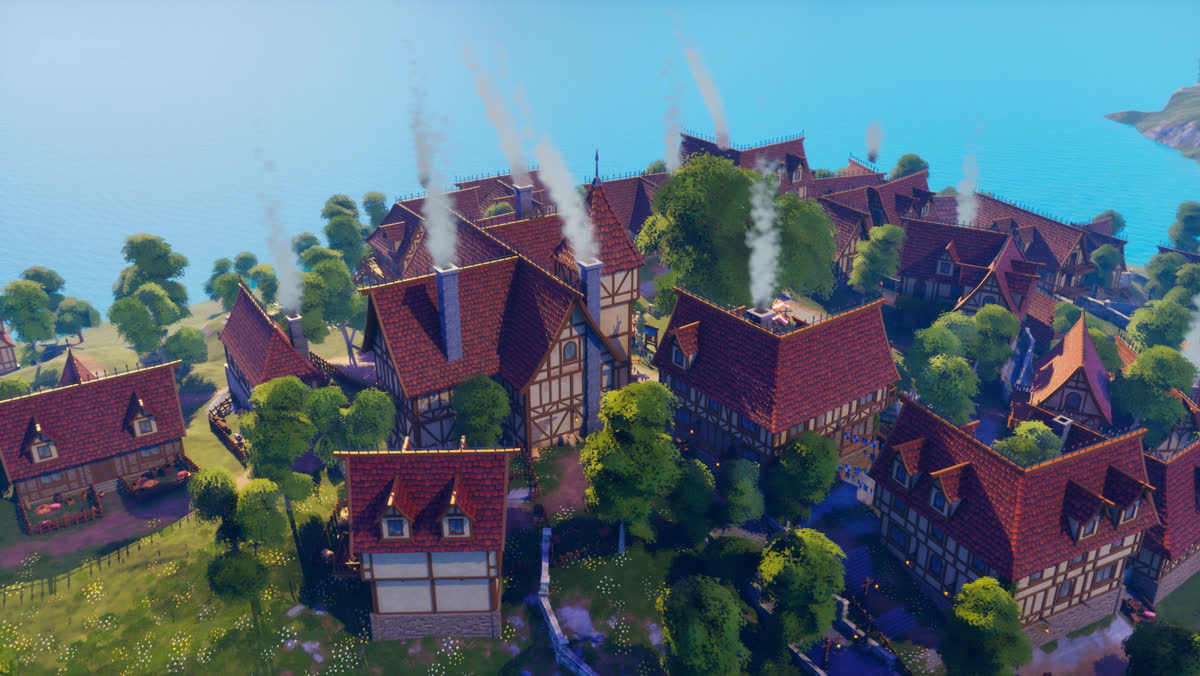
A foliage director in the town holds three sets of dressing: good, neutral and thorns. Above a modest threshold in either direction it swaps between them. A good town gets greenery around the plaza and strings of bunting between the houses, nearly a hundred banner strips in all. A cruel town loses the bunting, the greenery gives way to bare ground, and spike vines and thorn trees push in at the edges. The neutral town is quieter than either. The town's overall mood, the light, the sky, the haze over the plaza, blends the same way, and we captured it in three flyovers to check the three moods read as different places at a glance. They do.
Chimneys that earn their smoke
The town's buildings are plots that grow from rubble through tiers as you invest in them, and the dressing had to respect that. A plot now carries a list of what appears when it is built: chimney smoke, vines, planters, lamps, ladders, bunting. Plot dressing is paired to the building's real footprint, which turned out to be the hard part, because a plot at rubble level is a tiny actor and its level-one house is many times larger. We spawn the house temporarily to measure it, then decide which nearby props belong to that plot and which belong to a permanent neighbour.
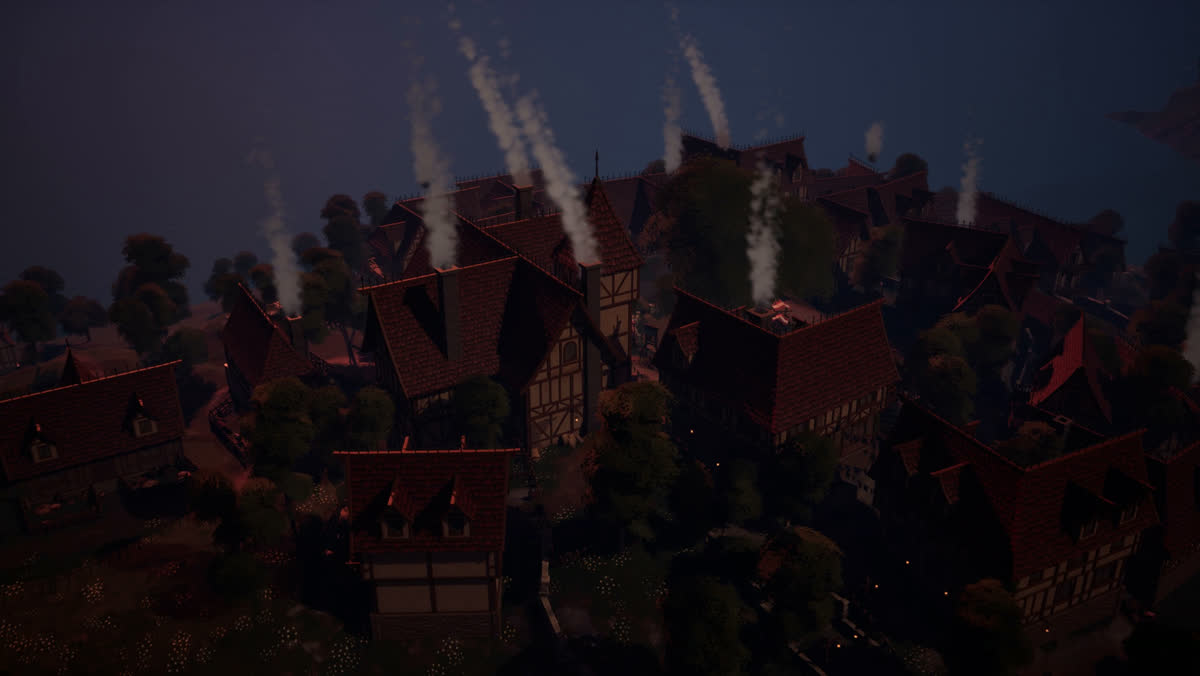
That pairing is what fixed a bug that players had been reporting in different words for weeks: floating chimneys and smoke over empty lots. Smoke had been rising from plots that were still rubble because the plume was placed for the finished house. Now the shop plot alone carries fifty-eight dressing pieces that appear only when the shop stands.
Cleaning the plaza
The plaza's market stalls were a pile of overlapping placeholder pieces: forty-four of them removed, and the rest arranged around the shop counter. A scan of the town found a hundred and twelve stall goods hovering above their tables, every one of them measured and deleted. And we gave the villagers you recruit somewhere to stand. Twenty-two spawn points went onto the plaza, two per role, with two fallback slots for anyone whose role is full, which fixed a fairly serious bug of its own: the spawn point had no root, so every recruit had been appearing at the centre of the world, which in this map is somewhere in a field.
What's next
All of this is built on the placeholder town, and the plan is to replace it: to assemble the real one from modular pieces so its buildings can grow from rubble to tier three on screen instead of as a level number. When that happens the foliage director, the plot dressing lists and the spawn points carry over, which was the point of doing this work as data rather than by hand.