September 28, 2026
Glowing Tracks, Telltale Vials: Rebuilding the Evidence Loop
Paw prints and claw marks now hug the ground and bark and light up under the Looking Glass, and the alchemy kit turns residue into a colour you can read. How we built both.
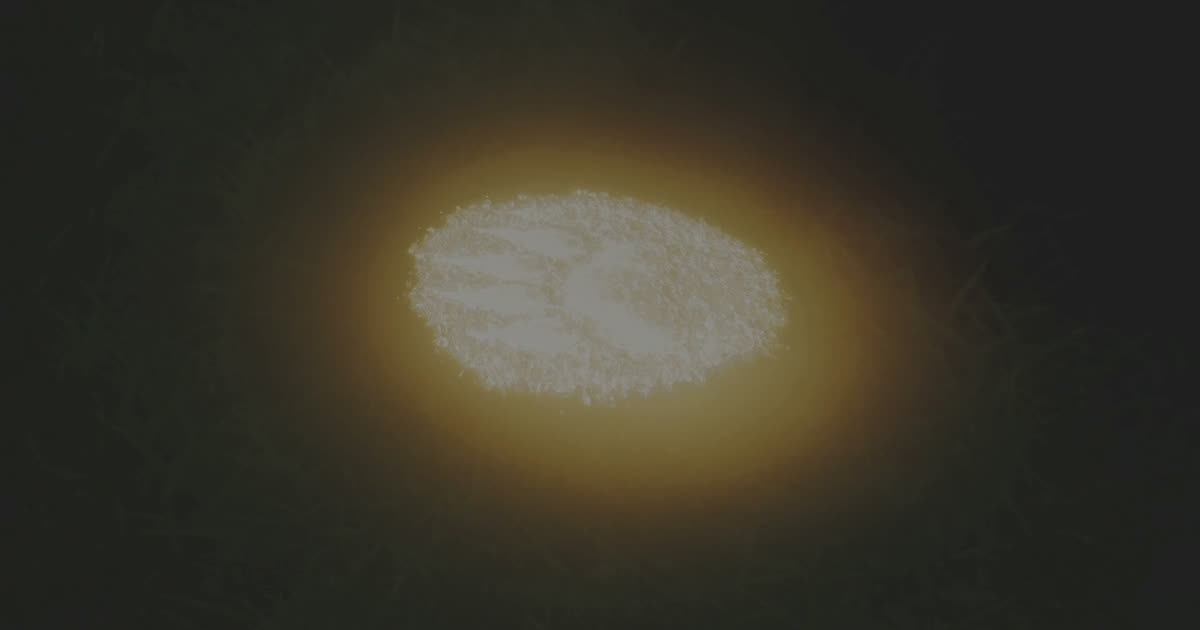
Investigation is the heart of The Last Fairytale, and tracks are the first thing most hunters find. A paw print in the mud, a set of claw gouges on a trunk, a bare human footprint where no villager should have walked. This update is about a small piece of that loop we rebuilt from the ground up: how those tracks sit in the world, and how they light up when you raise the Looking Glass.
From meshes to decals
Tracks used to be small meshes we dropped onto the ground. That worked in a flat test field and fell apart everywhere else. On a slope the print floated at one edge and sank at the other. On a tree trunk a flat claw mesh clipped straight through the bark.
So we moved every ground and surface mark to decals. A decal is projected onto whatever is underneath it, so the same paw print now wraps over roots, ruts and rocks, and a claw mark curls around the trunk it was scratched into. When a track spawns, we trace to the surface, align the decal to it, and let the projection do the rest.
Each track type is one shared material with its own mask texture: paw prints, claw marks and barefoot prints. That matters for deduction. A paw print points at the werewolf. Claw marks are shared by three creatures, so on their own they never convict. Barefoot prints where no person should be are the Skinwalker's tell.
The glow that would not glow
Without the Looking Glass, a track is nearly invisible: five percent opacity, enough that a sharp-eyed hunter can spot it, not enough to rely on. Raise the Looking Glass and the track should come alive. That is where the trouble started.
Our old highlight was a post-process outline driven by custom depth. Decals do not write custom depth, so the outline simply vanished. Our first replacement was an emissive glow baked into the decal material itself, shaped by the print. We took the darker parts of the track photo, the toe pads and claw gouges, and drove the glow from those, so only the anatomy of the print lit up.
It rendered nothing. The renderer we use in Unreal Engine 5 does not sample textures in the decal glow pass, so every texture-shaped glow came out blank. We switched decal rendering modes, restarted, tested again with the live material bound, and got the same result. Decals in this project cannot glow with their own shape. Full stop.
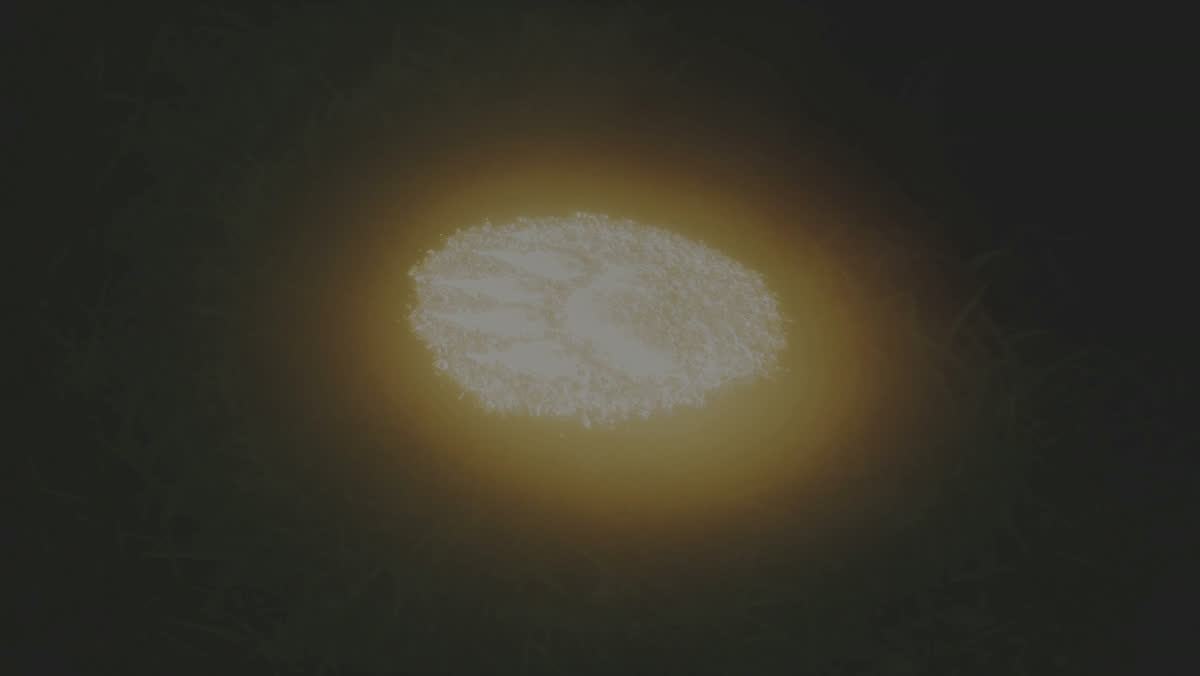
The second attempt moved the glow off the decal entirely. Each track got an invisible, unlit plane sized to its footprint, sitting a couple of centimetres above the surface. Its glow is the same print-shaped mask, blurred slightly so dirt grain does not light up the whole patch, and it pulses gently on a 1.6 second cycle. Amber for paws, red for claws, green for barefoot prints, so colour and silhouette both help you tell them apart. That is the paw print you see here, and it works.
Claw marks on bark
Then we tried it on a tree. A flat glowing plane cannot follow a trunk. From most angles the claw marks showed up as a thin bright line, edge on, hanging in the air beside the bark.
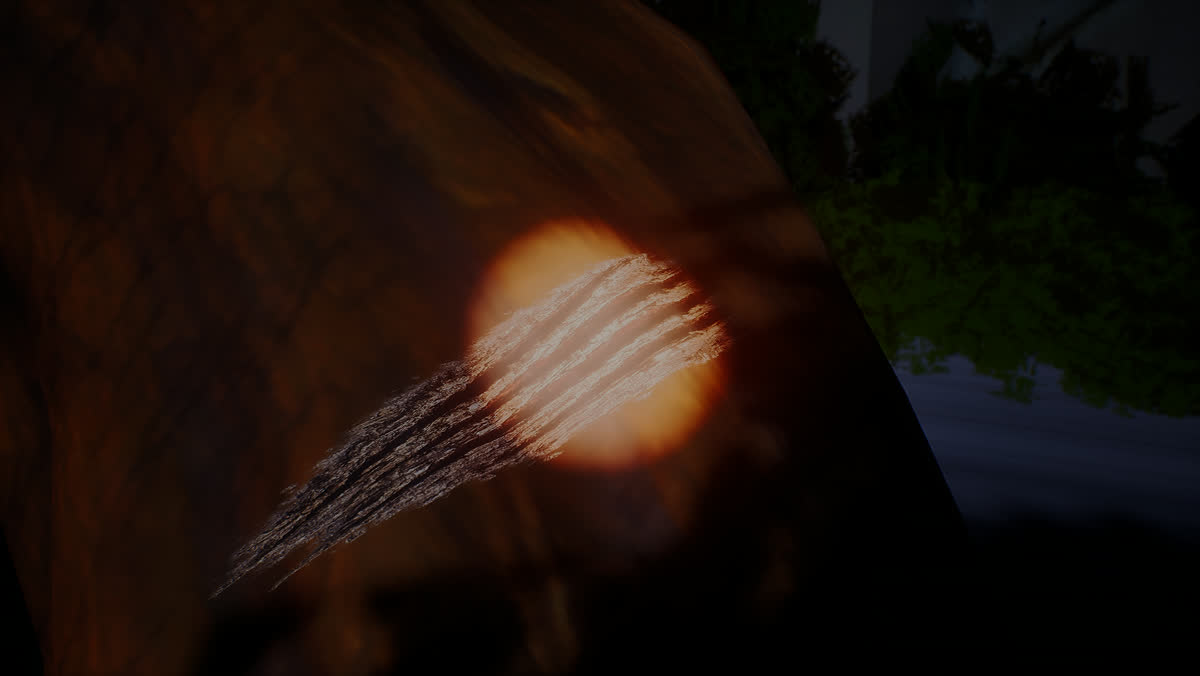
The fix that finally held was to stop faking light and use real light. While the Looking Glass is on a track, a small shadowless spot light snaps on over the mark and lights the surface for real. Bark, roots and rough stone all catch it, and because it is light rather than geometry, it follows every curve. The glowing plane is still there as an option for cinematics, but in play the light does the work now.
The Looking Glass tiers plug into the same system. A first-tier glass only brings a track partway up. The third tier lights it fully. Better tools, better sight.
The alchemy kit: residue in a bottle
Tracks tell you where a creature went. Residue tells you what it is made of. Blood at a kill, a smear of rot, a scorch of magic where nothing should have burned. The alchemy kit is how you read it.
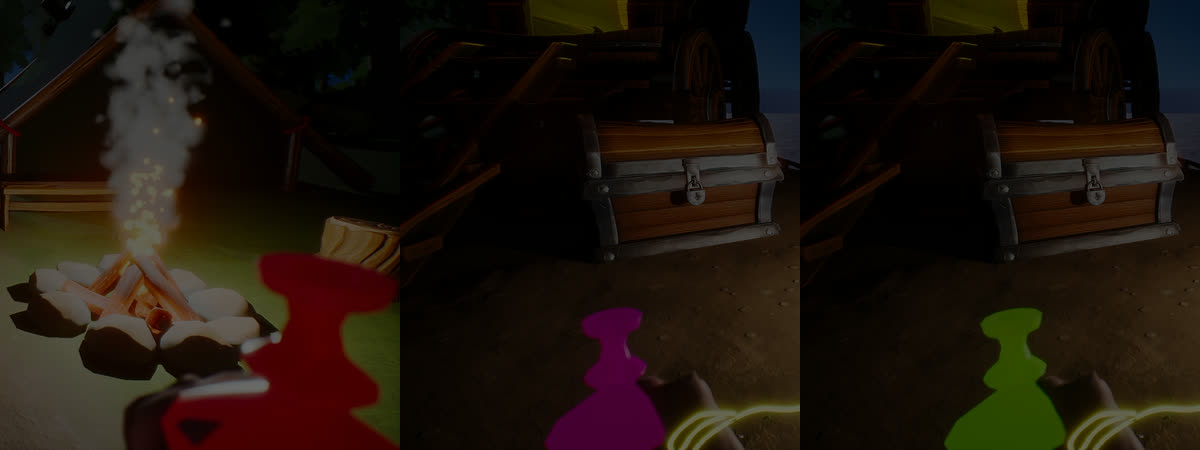
Find a residue sample, raise the kit, and the test begins. The vial in your hand starts clear and stays that way for somewhere between five and twenty seconds while the reaction runs, and then it turns: red for blood, violet for magic, green for rot. The result is a real piece of evidence, logged for the whole party the moment the vial changes. On a clean sample it stays clear, and that is an answer too.
The kit has tiers like every other tool. The cheap kits are fussy. Move while the reaction is running and a first or second tier kit spills the test and you start over, so you are standing still in the dark, waiting on a colour, listening. The third tier lets you keep walking. That trade is deliberate. Alchemy is the expensive, decisive read in a hunt, and we want the moment you commit to it to cost you something.
What's next
The decal path now handles prints, scratches and stains, so more kinds of surface evidence can come in without new code. We are also expanding the audio side of evidence, so what you hear in the forest carries as much weight as what you see. And we keep tuning how faint an unrevealed track should be, because the best moment in a hunt is still spotting one before your glass does.