November 24, 2026
Fitting the Hunter
A duster, a hat, gloves, boots and a cloak that moves. How we refit two outfits from other character packs onto our own bodies with a Blender pipeline, and the one export setting that made everything invisible.
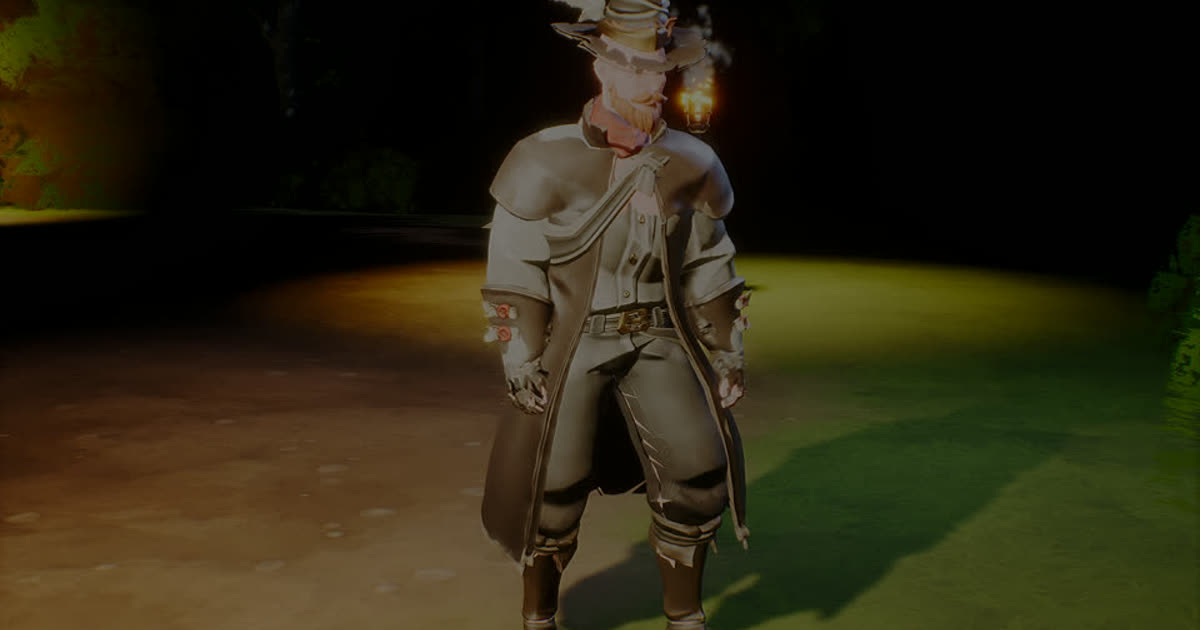
Our villagers wear clothes from a stylised character pack that fits their bodies because it was made for them. The hunter's kit was not. The long duster, the wide-brimmed hat, the gloves and boots we wanted for the game's rangers come from a different pack with a different skeleton and different proportions, and the cloak comes from a third. This sprint was about putting them on our bodies without redoing them by hand, and about the pipeline that makes the next outfit a script rather than a week.
The cloak
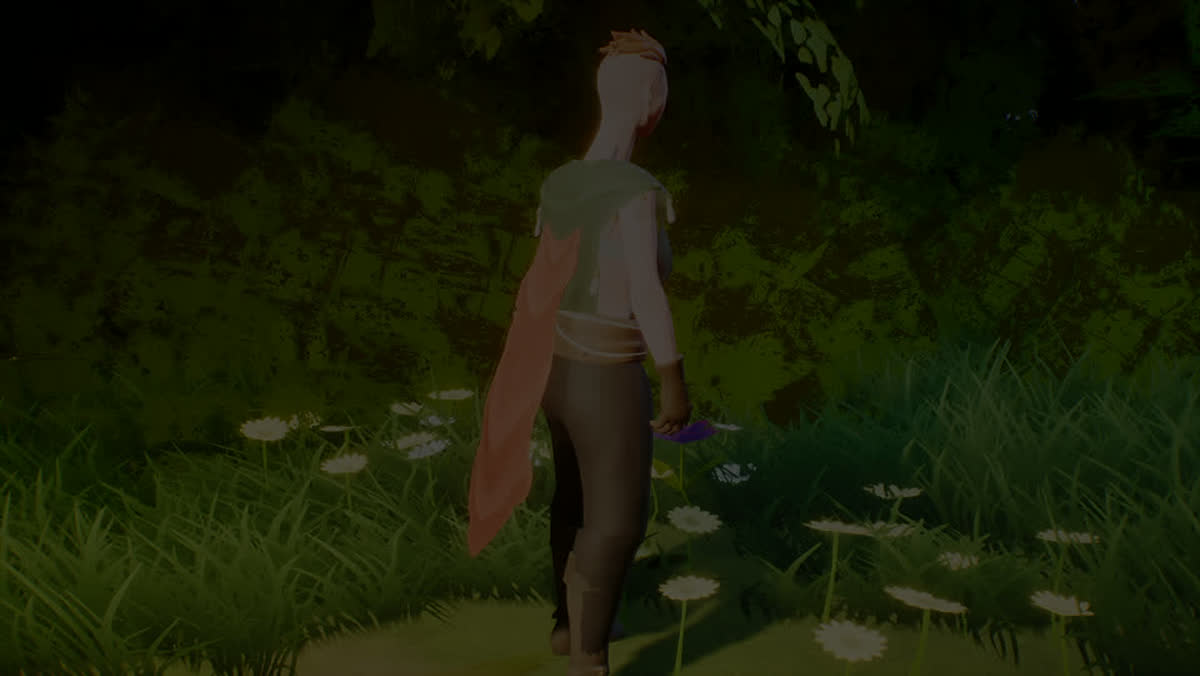
The cloak came first because it moves. A cape is a chain of bones, and if you simply scale another pack's cape onto a bigger body it sits inside the back or floats off it. The fit script maps the cape by landmarks, shoulder span for width, neck to knee for height, the back surface for depth, then builds a depth envelope around the body so no part of the cape can ever sit inside it. Shrink-wrapping it outward, the obvious approach, put spikes over every thin ribbon on the body. The envelope was the fix.
Physics took three rebuilds. The importer merged the small cape bones into one useless body. The original pack's physics hung the cape like a plank on our re-exported skeleton. And a cape that collides with the world gets shoved sideways by every flower and blade of grass in the clearing, because in this forest the foliage has collision. The final cape ignores the world entirely and swings from a chain of capsules built at runtime, and the screenshot rig logs where every cape bone settled so we could check it in numbers rather than squinting at pictures. Both hunter bodies have it, and the ranger archetypes wear it.
The outfit
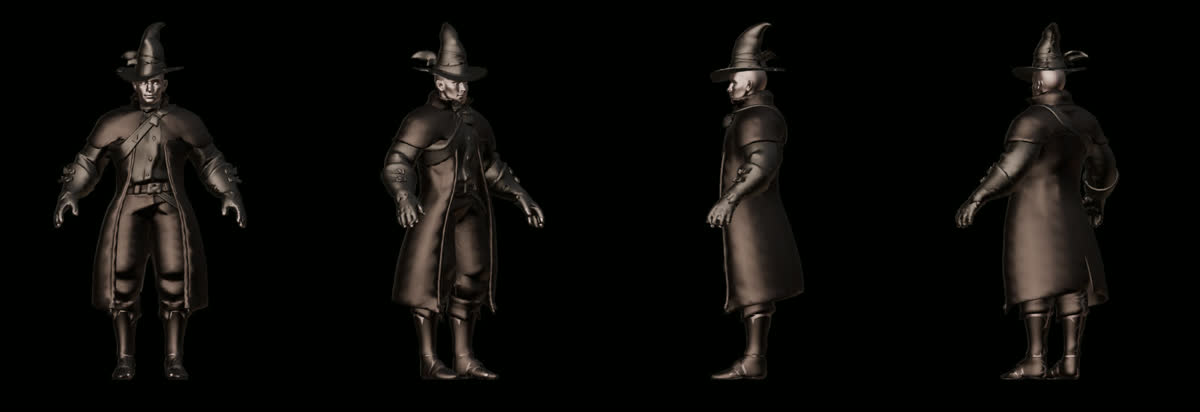
The duster, shirt, trousers, boots, gloves and hat were harder, because they came rigged to a two-hundred-bone skeleton and our bodies have a hundred. The method that worked is a space warp: take the bone positions the two skeletons share, add a set of girth measurements taken by casting rays around the limbs, anchor the ground and the crown of the head, and fit a smooth deformation that carries every vertex of the outfit from the pack's body to ours. Then push the result clear of a watertight copy of our body, because the stylised bodies are a dozen overlapping open shells and any naive inside-or-outside test lies near every seam.
The list of things that went wrong is in the project notes, and it is long: bone axes that come out in a different order on each rig, outlier rejection that threw away the wrong landmarks, garments that let the body bulge through their big flat triangles until they were subdivided once. The one worth telling is the last. The exported outfit looked perfect in the editor, right down to the pose and the bounds, and was completely invisible in play. It took a round trip of a known-good mesh through the same export to prove the exporter was at fault: Blender writes the skeleton with a scale of a hundred and the bone positions in metres, and our engine imports that "correctly" while every mesh that follows the body's pose vanishes. The fix is a handful of export settings. They are written down in capitals now.
What it means
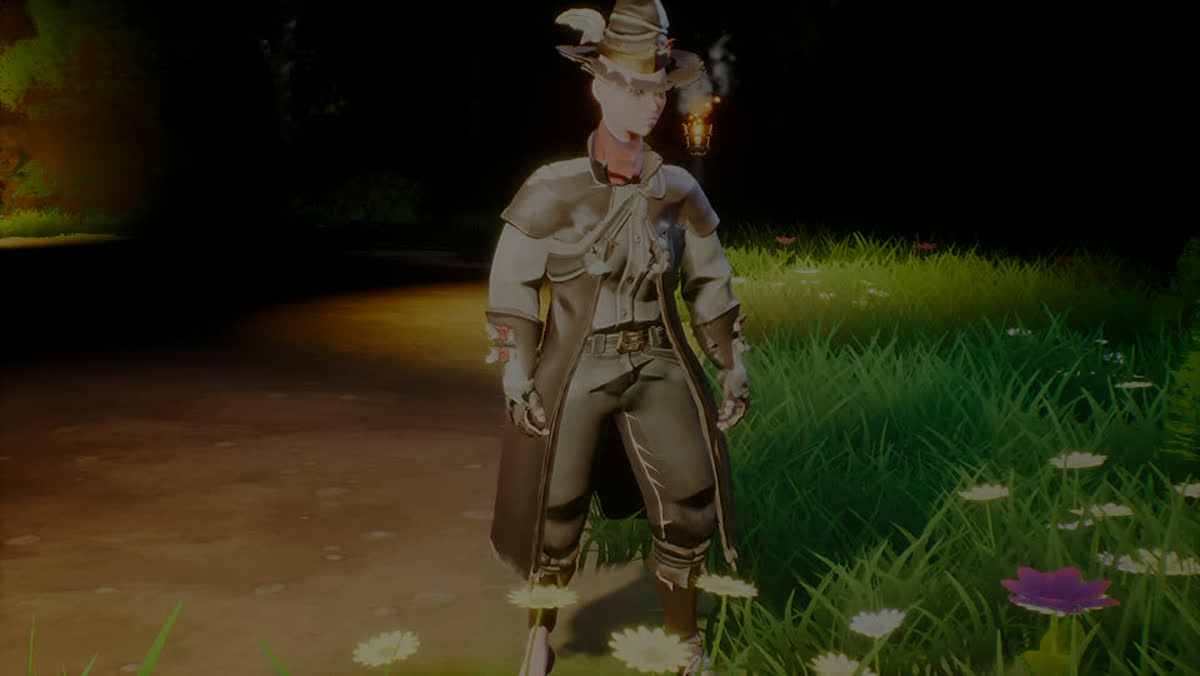
Two new hunter archetypes wear the full set, hats included, on both bodies, and a hat slot now exists for everyone else. More usefully, the pipeline exists. Any future clothing from any pack is now: export the pieces and the target body, run the refit, check the review renders, import on the body's skeleton, add it to a slot. That is a morning, not a week, and it is the difference between a game with one outfit and a game with a wardrobe.
What's next
The rangers wear the duster; the town's other archetypes wear the stylised pack. The next fitting is the reverse trip, so a villager's own clothes survive when they pick up a hat. And the cape wants its own material, since it still borrows the pack's.