October 27, 2026
Looking Down
A small change with a big effect: the hunter's body now bends with the camera, so the Looking Glass, the lantern and the flintlock follow your eyes instead of floating in front of a fixed chest.
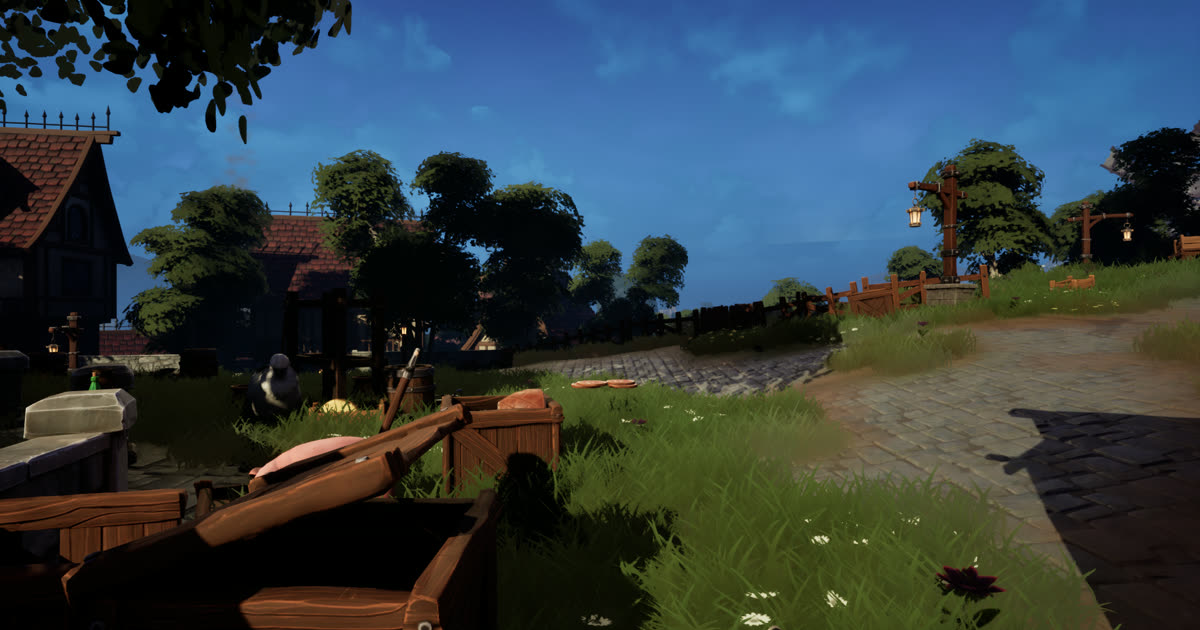
Most of what a hunter does in this game involves looking at the ground. Prints are on it. Residue is on it. The creature comes across it. So it was a problem that, for months, looking down was the one thing the first-person view did badly. This post is about the fix, which is small in code and large in feel.
The rule
The rule we set for the first-person camera is that the game should control like a first-person adventure, in the way Skyrim does: your hands, and whatever they hold, track where you are looking, for every tool and every weapon, not only the gun. Aim down and the lantern goes down with your gaze. Raise the Looking Glass and it comes up to the eye you are actually looking through.

The old build did not do that. The hunter is a single full-body character with the camera at the head, which is the right way to build a first-person game that also has a third-person body for your friends to see. But the arms were animated against a chest that never moved. Look up and the tool drifted low in the frame. Look down at a print and your own fists rose into your face.
Bending the spine
The fix is a bend. After every animation has played, including the tool raises and the attack montages, three bones of the hunter's spine are rotated by a share of the camera's pitch, in the body's own space, so the chest leans forward when you look down and back when you look up. The hands, the tool and the weapon all ride the chest, so they follow.
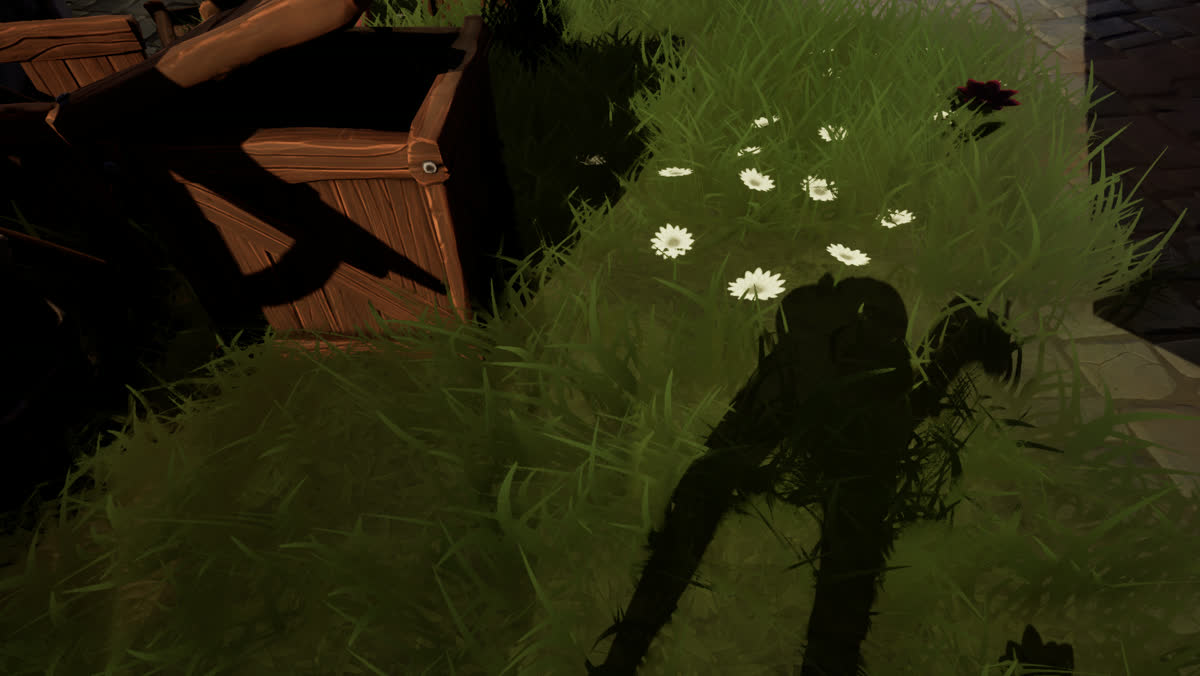
That alone was not enough, and the reason is worth writing down. The first-person camera is not attached to the head bone. It sits on the hunter's capsule at a fixed height, and the crouch and head-bob code drives it from there. Bending the chest thirty or forty centimetres under a fixed camera just moves the problem: look up and the hands swing into your face, look down and they swing away. So the camera now moves along the same bend, the way your eyes would if your spine were bending, using the same weights. Attaching the camera to the head bone would have been the obvious shortcut, and it would have doubled the head bob and fought the crouch, so we did not.
We also tightened the lag on turning, so the body catches up with the view faster than it used to, which matters in the same moments: spinning to face something behind you with a weapon up.
Proving it
Feel is hard to argue about, so we measured it. The screenshot rig that takes our tool shots got a pitch setting, and for every capture it now writes down where the right hand sits relative to the view. Before the change, that number moved with the pitch. After it, the hand stays in the same place in the frame whether you are looking at the canopy or at your boots, which is the whole point, and the frames in this post came from those runs.
What's next
The bend covers pitch. The next piece of the same rule is the flintlock's aim offset, so the barrel lines up with the view when you raise it, and a proper split between the arms so the left hand can keep holding a torch while the right one aims. Both are on the list for the gun's own post, which is Thursday's.