November 17, 2026
The Monster Hears You
The hunt AI was rebuilt around two brains, the way Alien: Isolation does it: a creature that only knows what it senses, and a director that decides what it is allowed to do to you.
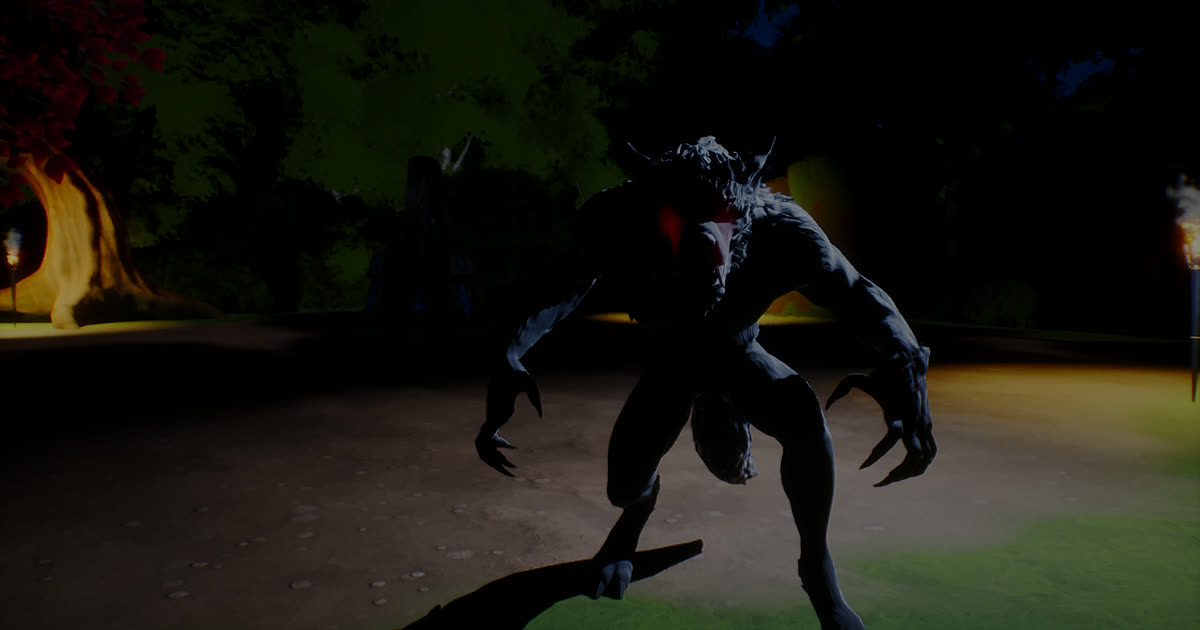
The playtest note that started this sprint was three complaints in one sentence: the werewolf stands still, it never searches, and it sees through everything. All three were true, and the third was the worst, because a creature that always knows where you are makes hiding pointless and running a formality. So we rebuilt how the creature thinks, borrowing the structure from the best hunter in games, the one in Alien: Isolation.
Two brains
The creature no longer decides everything for itself. There are two brains now.
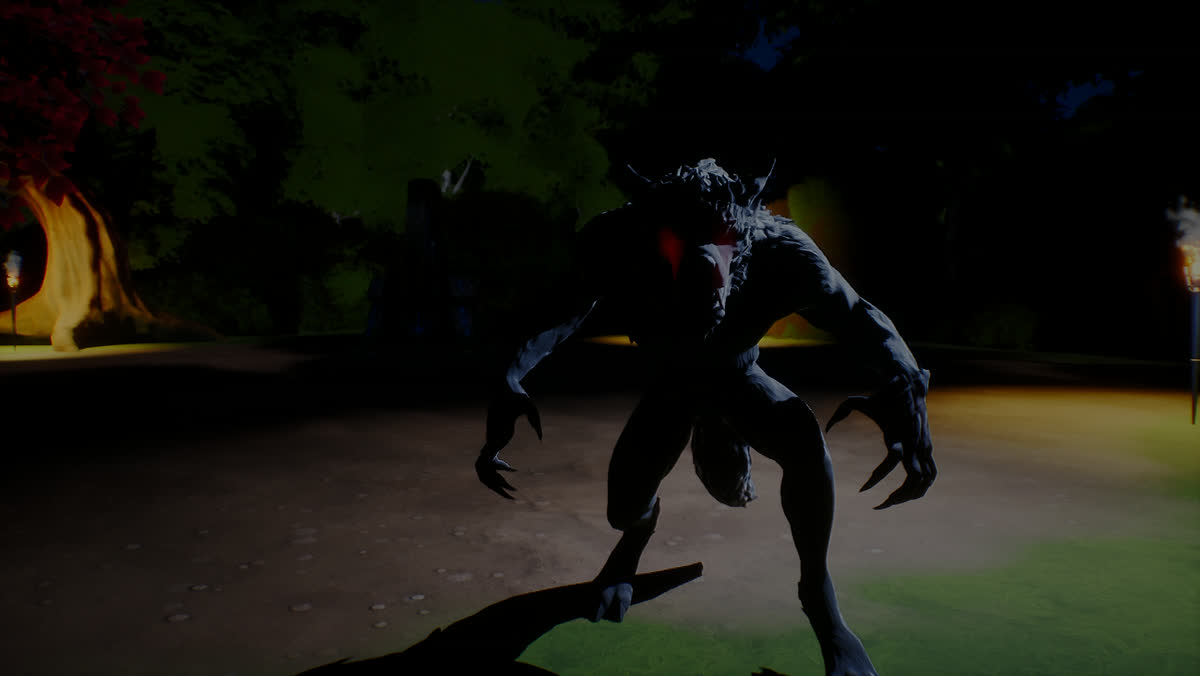
The creature's own brain knows only what it senses. It sees inside a cone of a hundred and fifty degrees, and only if nothing is in the way, with bushes counting as cover. It smells you within a few metres. And it hears you, finally, because for months its hearing had been silently disabled by a default setting that only listens to enemies, in a game where nobody had been assigned a team. Now it hears everyone, scored by distance and by what is between the noise and its ears: walking carries a dozen metres, sprinting thirty, and a bush between you halves it.
The second brain is the Hunt Master. It lives on the game, not the creature, and it sees everything: every hunter's position, health, speed, who is isolated, who is in the safe zone, whether the creature currently knows where its target is. It keeps a tension gauge that rises with contact, damage and downs, and it uses that to decide what the creature may do. It calls lulls when tension is high, a few seconds where the creature will not attack and hears less, so a bad fight has breathing room. It sets the creature's cadence, how long its pauses run. When the creature has been blind for too long it hands it a search zone, wide at first and tightening over half a minute. And if the creature has been lost for long enough, the master reveals your position, so a hunt never dies of stalemate.
What the creature believes
The heart of the rebuild is a simple idea: the creature acts on where it believes you are, not where you are. While it can see or smell you, belief and truth agree. The moment it loses you it keeps your last known position and the direction you were moving, and every decision from then on uses that. Attacks are refused until it actually knows again. Noise refreshes the belief; a loud enough sound is as good as a sighting.
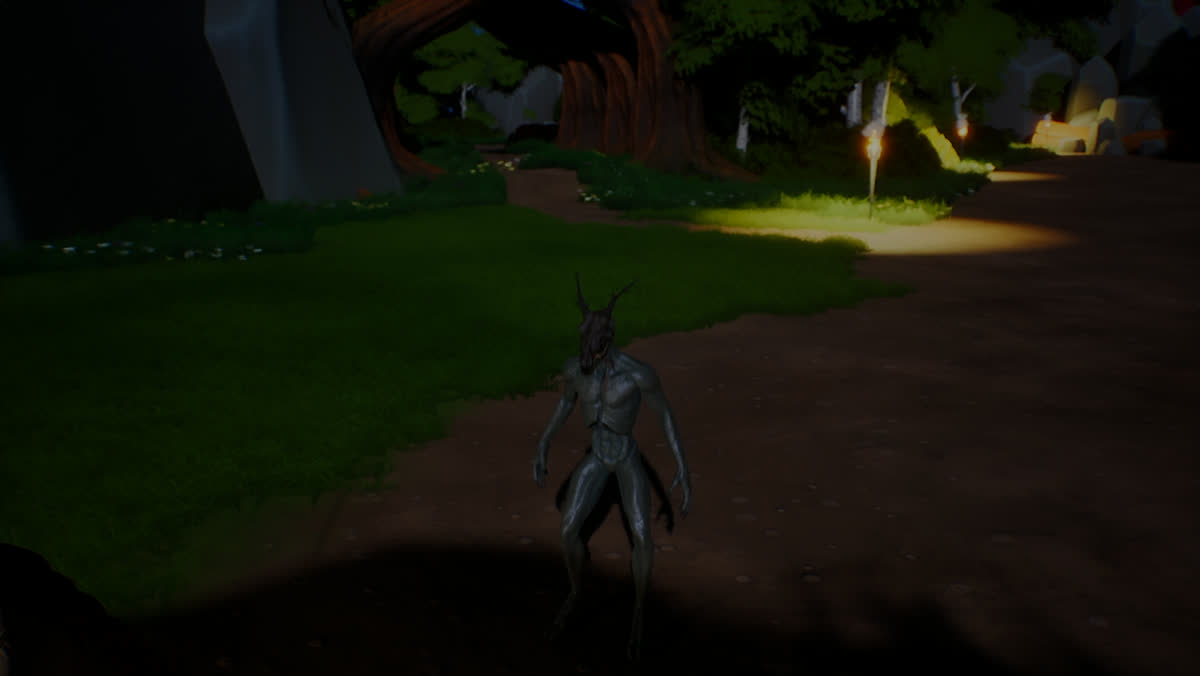
That gives the fight loop real states instead of flags. After an attack the creature retreats, backing off while still facing you, where the old code turned its back and walked away. Then it recovers, a pause that is your window to punish. Then it strafes, circling you at a fixed distance, always facing, and leaving the circle only to punish a hunter who rushes. Then it approaches again. Lose it and it searches: a run to where it last knew you were, a look around, a ring of points biased toward the way you were going, its head turning toward any sound. Fail that and it roams, howling once, forgetting the old position, and wandering the master's hint zone until sight, smell, sound or the reveal gives you back. It never stands still any more.
We verified the whole cycle in the logs, including back-hops and lulls, and one full run where the creature went blind, searched, roamed into the hint zone, and re-acquired the hunter by sight thirty-three seconds later.
What's next
Hearing is verified in the log but not yet in play, because an idle test hunter makes no footsteps, and crouching is still completely silent, which cannot stay. The werewolf's animation set is speed-only, so it slides its feet when it strafes and backpedals. And the tension gauge climbs too fast against a hunter who is just standing there, which is a tuning problem with knobs already exposed. All three are on the list for the next hunt sprint.