October 1, 2026
The Skinwalker Wears Your Face
The third creature in the build can copy a member of your party, outfit and all, and walk among you for half a minute. Here is how the Skinwalker hunts, and how you hunt it.
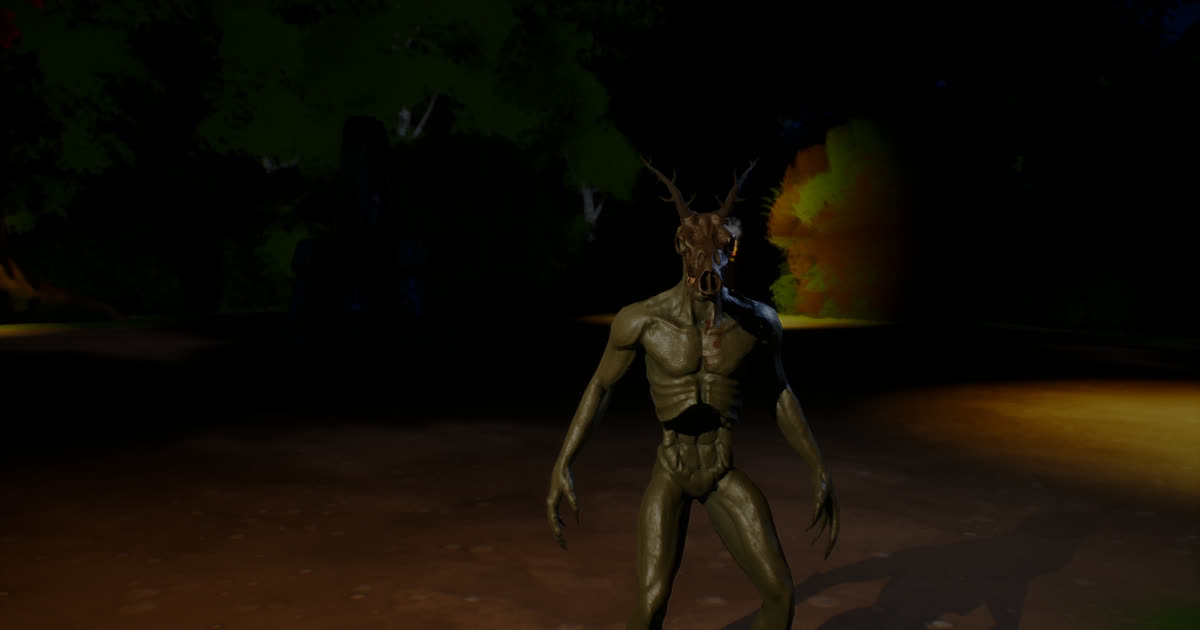
Every village has the story: the stranger who came in at dusk wearing a dead man's face and sat down at his own widow's table. That is the first line of the Skinwalker's page in the huntsman's journal, and it is the whole design in a sentence. The werewolf tests whether you can fight. The Wendigo tests whether you can keep your nerve. The Skinwalker tests whether you trust the people standing next to you.
Count your companions
The Skinwalker's signature move is a shapeshift. When it fires, the creature picks the member of your party who is furthest from it, not the one it is currently stalking, and takes their appearance: body, face, and the outfit they walked into the forest wearing, piece by piece. For the next twenty-five seconds there are two of that hunter in the woods. Then it drops the disguise and is itself again.
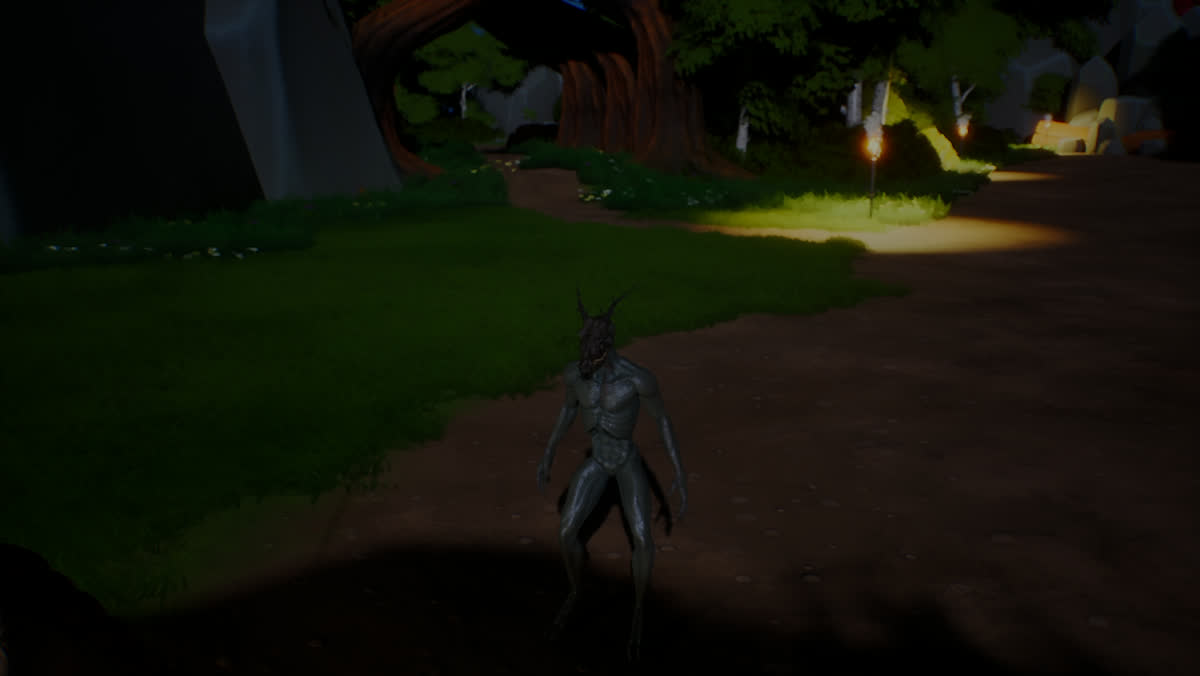
It can do this while you are still investigating, and it does it again when the hunt begins, on purpose. Early on, a figure in the trees that looks like your friend is a reason to lower your guard. In the hunt it is a lure: the Skinwalker comes toward you wearing that face, and only drops it when it is close enough to strike. By then the question of whether that was really your friend has answered itself.
We had to make one call for solo hunters. With nobody else to copy, the Skinwalker copies you. Meeting yourself on the road at night turned out to be the most unsettling version of the trick, so we kept it.
The tells
Like every creature, the Skinwalker leaves evidence in four channels, and like every creature, none of it convicts alone.
It walks barefoot, and the prints are a man's, or near enough to fool you until you notice they never tire and never turn for home. The residue it leaves is not blood; the alchemy kit names it raw magic, the same stuff the old guild used to bottle. Through the listening horn you hear it howl like a wolf, and then, worse, call for help in a voice you know. That cry is shared with the Wendigo, because both creatures mimic people, and the barefoot prints and magic are shared with something else on the roster that we will write about another week. As with the others, the second clue is the one that closes the case.
Then there is what to bring. Silver is wasted on it. Iron and fire both bite, and holy water bites hardest, so the loadout that kills a werewolf is the wrong loadout here. Guessing right before you commit is the difference between a hunt and a funeral.
Building a creature you are meant to misread
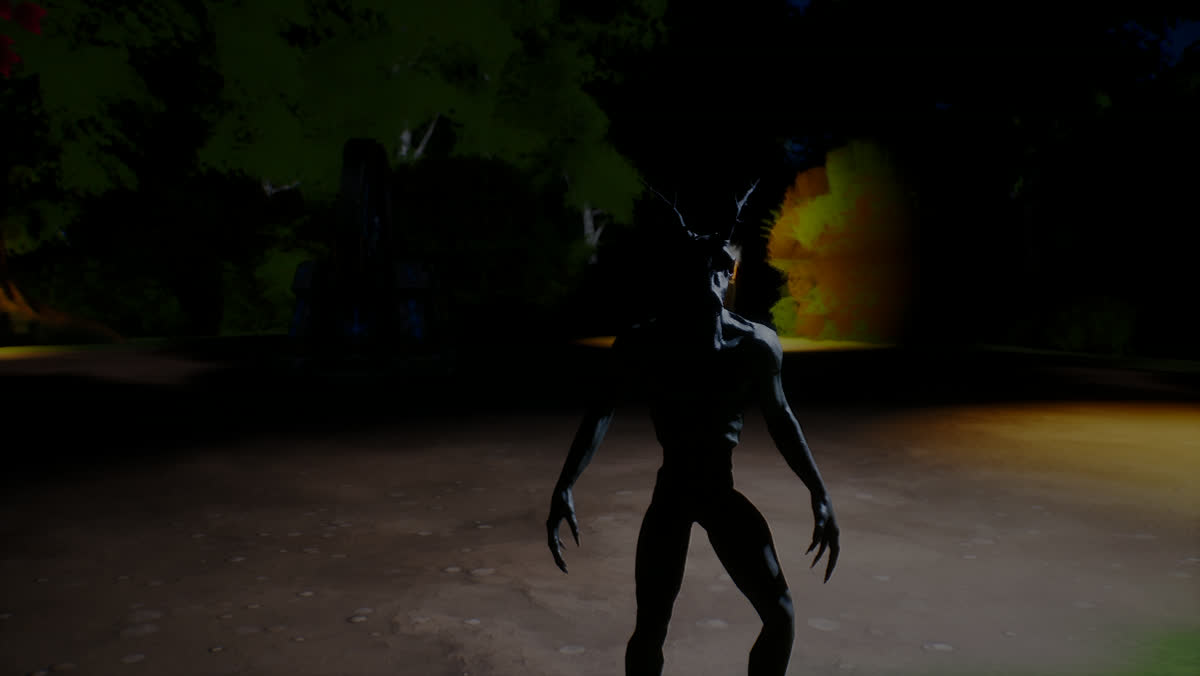
Under the hood the Skinwalker is built on the same skeleton as the Wendigo, at human scale rather than the Wendigo's towering one, with its own olive skin and charcoal horns. That was a deliberate economy. Its true form is a silhouette you glimpse; the disguise is what you actually look at. The work went into the swap instead: a native system that trades the creature's mesh and animation for the copied hunter's body and outfit, keeps it visible through the phases where the creature would normally lurk unseen, and restores its true form cleanly afterwards.
Adding a third creature also shook out bugs the first two had hidden. The Skinwalker's barefoot prints never spawned at first, because the print blueprint was still tagged as a paw under the hood, so its only track evidence was silently filtered out of every hunt. That fix is in, and it is why the barefoot decal got its own material in the tracks update.
What's next
The disguise is convincing at a glance and less so up close, so the next pass is on the small tells: how a copied hunter moves, what it does when spoken to, and what the listening horn hears when it is standing right beside you. And the roster keeps growing. The Skinwalker was the third creature in the pool, and it was not the last.