September 29, 2026
The Wendigo Joins the Hunt
The second creature is in the build. The Wendigo is tall, starved and relentless, and it shares just enough clues with the werewolf to keep every hunt uncertain.
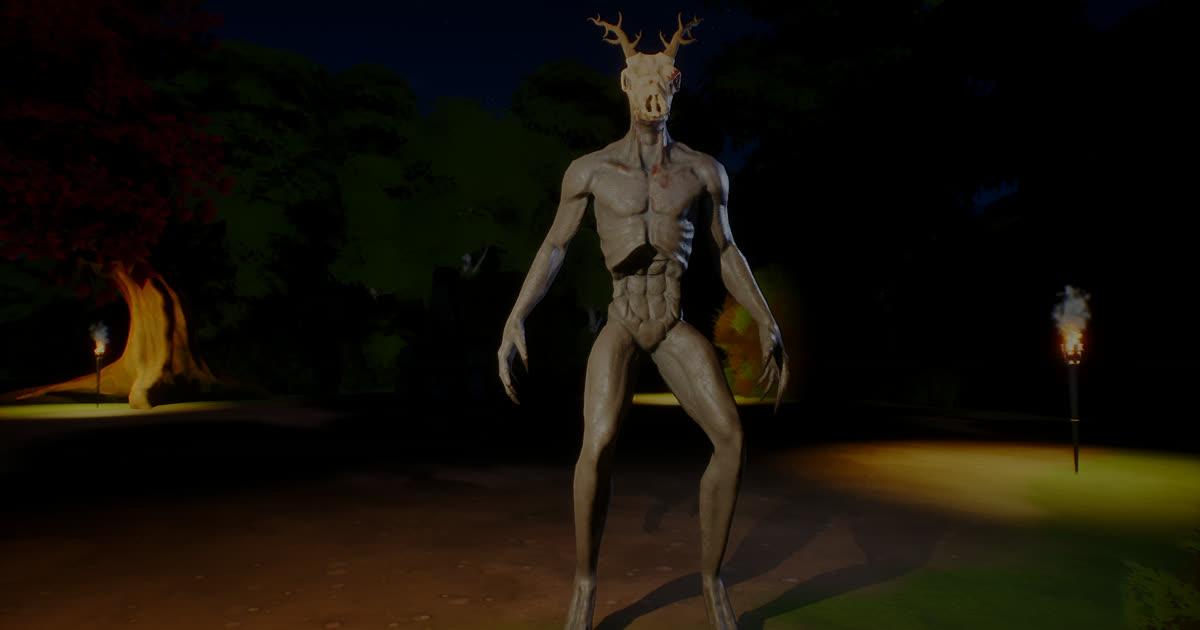
For a long time The Last Fairytale had one monster. The werewolf carried every internal playtest, and it taught us most of what we know about how a hunt should feel. But a game about working out what you are hunting cannot have one answer. The Wendigo is the second creature in the build, and the first one built to be confused with another.
A hunger that wears a man
There was a winter, so the north folk say, when a man ate what no man should, and the hunger never left him. That is how the huntsman's journal opens its page on the Wendigo, and it is the brief we built the creature to. It stands well over a hunter's height, thin as a fence rail, with a stag's skull where its face used to be. Around a torch it reads as a starved, stretched body. In the dark it is mostly antlers and reach.
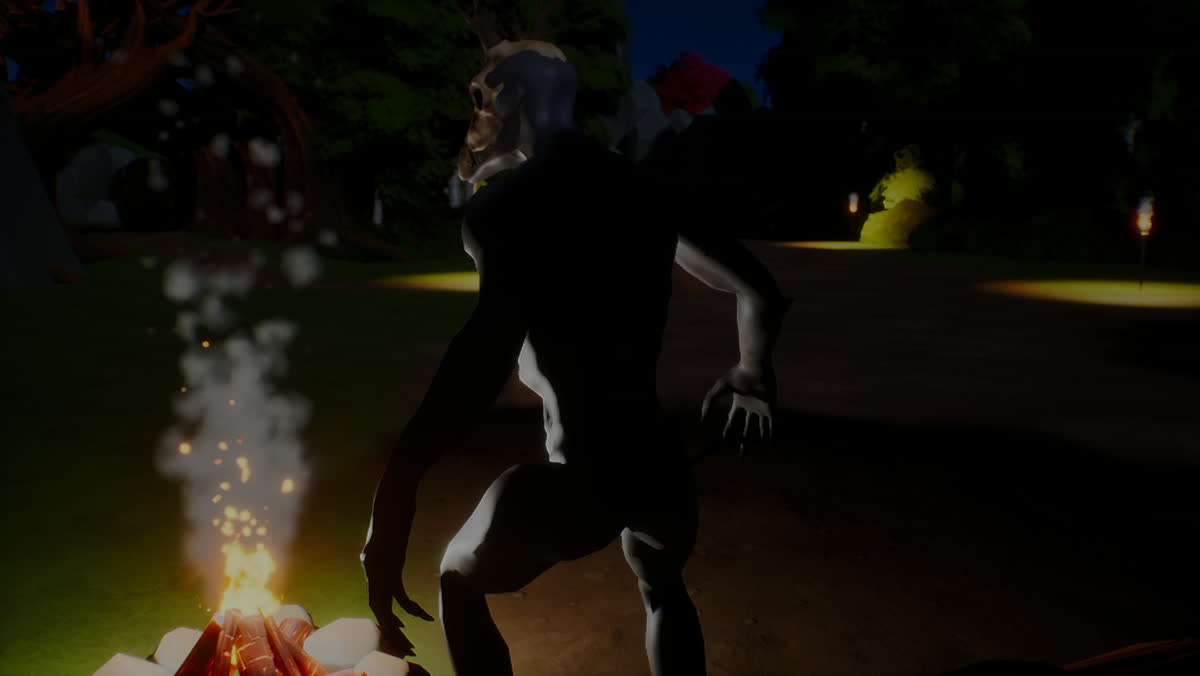
We tuned its size in play. The first pass stood about two and a half metres tall and felt like a person in a costume. We brought it down, then, once it was moving and hunting, pushed it back up. It now stands about one and three quarter hunters tall, tall enough to loom over the party when it comes in close.
Built to be mistaken for something else
Every creature in the game leaves evidence in the same four channels: tracks, residue, sound, and the omens in the sky. The Wendigo's profile is claw marks, rot in the alchemy vial, a howl, and a distorted cry for help. On paper that is a clear signature. In the forest it is not, because every one of those clues is shared.
The howl overlaps the werewolf, so a howl on the wind tells you it is one of two things. Claw marks raked into a trunk are shared with the werewolf too. The cry for help is shared with the Skinwalker, because both creatures mimic a human voice, and we did not want a single sound to convict on its own.
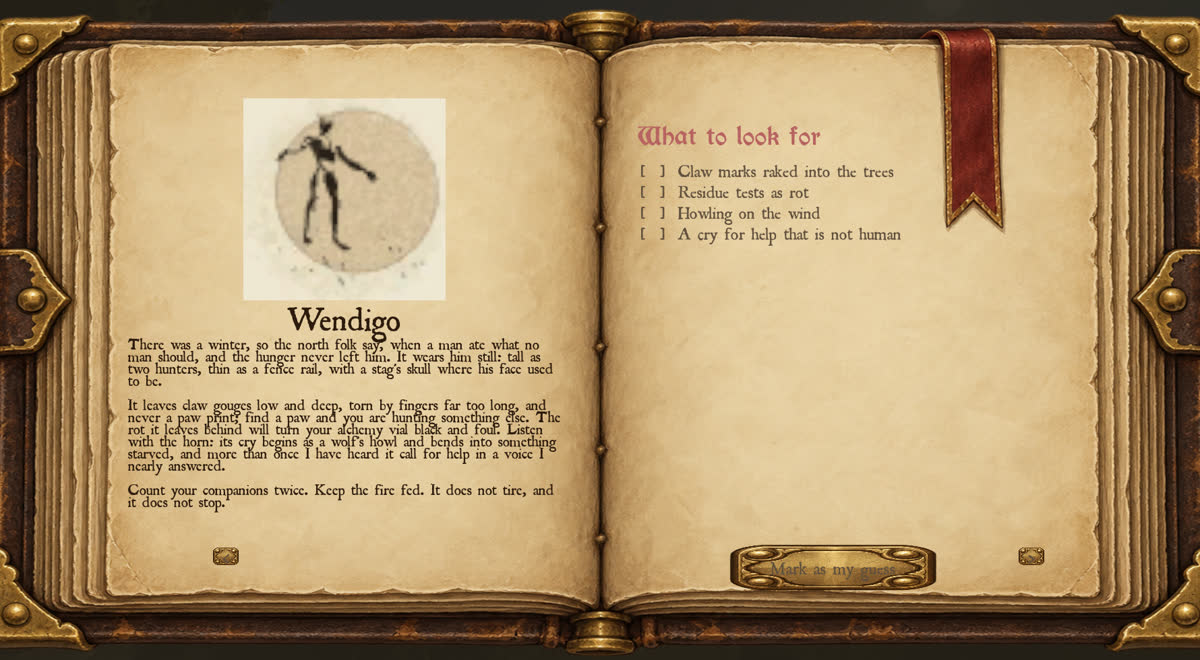
What separates it from the werewolf is what it never leaves. A paw print rules the Wendigo out. Rot in the vial rules the werewolf out. So a good hunt is not about finding one clue, it is about finding the second one that closes the case. The notebook lays all of this out as a checklist so the party can argue about it at the campfire before anyone commits to a guess.
What it is like to hunt
Contracts never tell you which creature you are hunting. Every contract carries a hidden roll across the roster, and the Wendigo is in that roll now alongside the werewolf. You take the same job, walk into the same forest, and find out from the ground and the trees what came before you.
The Wendigo hunts differently. It is relentless. Its dread builds faster than the werewolf's, and it favours ambushes over open chases, so a party that stops paying attention to the tree line pays for it. It has its own swipe attack built on its own body, since a creature this tall cannot borrow the werewolf's animations. It is weak to fire, and the journal says as much: keep the fire fed.
We also fixed a run of bugs that only showed up once a second creature existed. The first Wendigo we spawned into a hunt did not move, did not attack, and was labelled "Big Bad Wolf" on its health bar, because two of its definition slots were still empty. Finding and closing gaps like that is most of what adding a second monster turned out to be, and it means the third and fourth creatures came in much faster.
What's next
The Wendigo's cry for help is recorded and wired in, so the next job is placing it well: we are expanding the forest map's sound coverage so the listening horn has more to catch, and more places to catch it from. And the roster is where the work goes after that: more suspects in the pool, and more shared clues to argue over.