October 7, 2026
Tools in Tiers
Every investigation tool now comes in three grades, from a cow horn and a guttering torch to a hunter's ear and a lantern that never goes out. Plus a new one: the thermoscope.
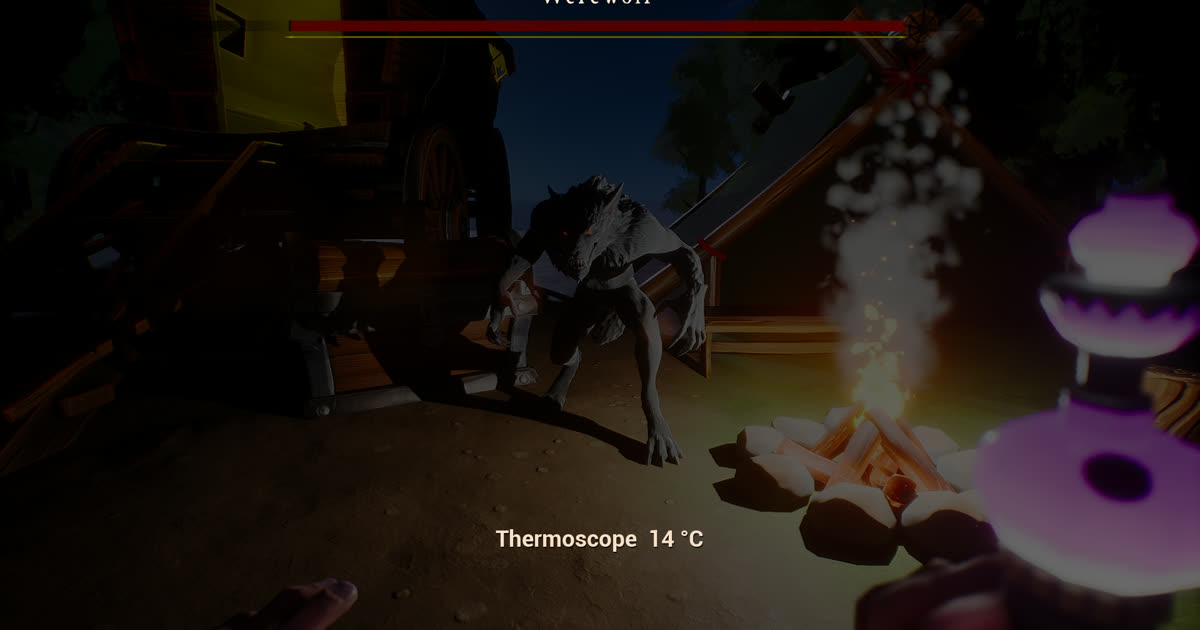
A hunter is only as good as their kit, and until this sprint every hunter had the same kit. The Looking Glass was the Looking Glass. The horn was the horn. That made the town's crafting benches feel decorative, because there was nothing better to make. So we rebuilt every investigation tool as a family of three, and added a fourth tool that had been on the wish list for a long time.
Three grades of everything
Each tool now exists at three tiers, and the difference is not a number on a tooltip. It changes how you play.
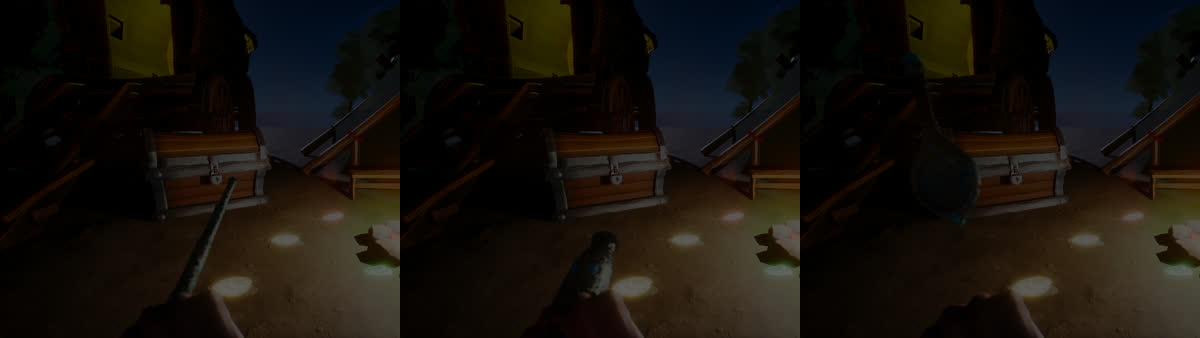
The crude Looking Glass reaches half as far as the master lens and shows tracks dimly. It cannot even make out the moon, which matters, because the moon is evidence. The brass glass reaches further and sees the sky. The master lens shows everything at full range and full contrast.
The listening horn starts as a cow horn that gives evidence sounds a small boost. The brass horn gives a larger one. The Hunter's Ear is built to do that and more: every few seconds it will give you a directional cue from the creature itself, so you can tell where it is without seeing it. The cue is wired up and waiting on its own sound.
The alchemy kit's tiers are about time and patience. The field kit takes fifteen to twenty-five seconds to run a test and spills if you move. The glass kit takes eight to twelve. The apothecary kit reads in four to six seconds and you can keep walking while it works.
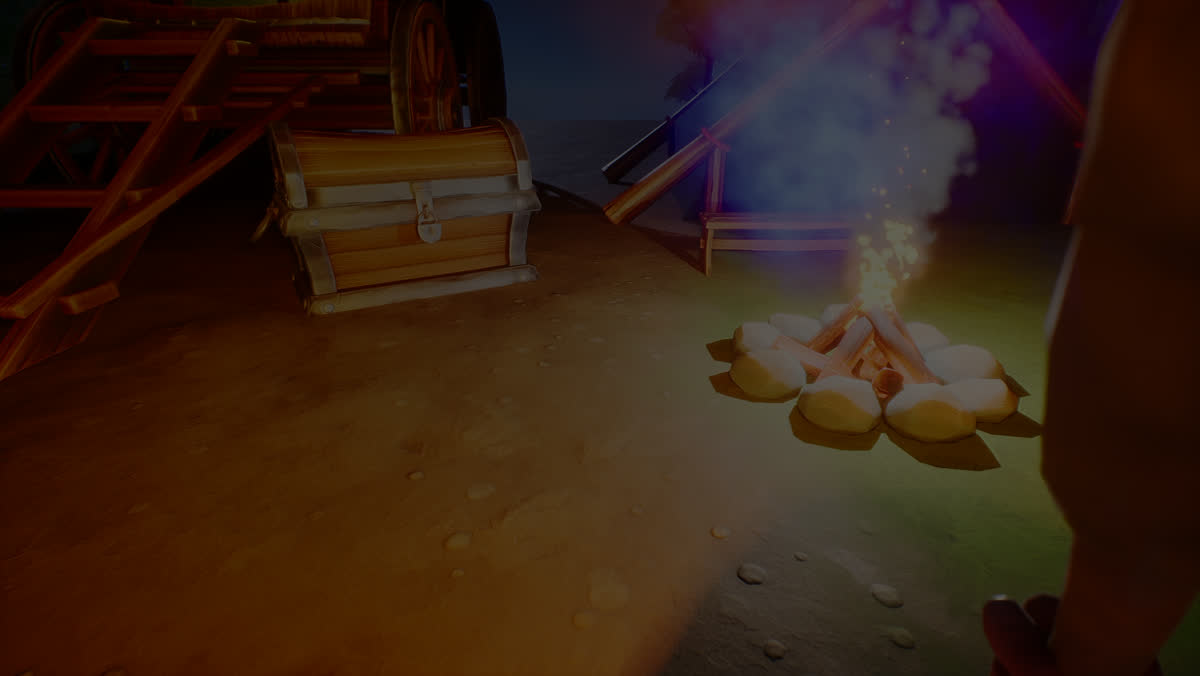
And the light in your off hand has tiers too. The plain torch is dim and gutters out roughly every forty-five seconds, so you learn to relight it by feel. The iron torch is brighter and lasts longer between outages. The lantern is brighter still, never goes out, and has no open flame to fuss with. We calibrated all three against the forest at night, because our first values turned every frame into a white wash. The wash was the light itself, not the camera.
The thermoscope
The new tool is a period piece: the thermoscope, an early heat detector from Padua around 1612, the ancestor of the thermometer. In the game it reads the air around you and, crucially, the heat of anything living nearby. The werewolf runs hot. The Skinwalker runs a little warm. The Wendigo is twenty degrees below the night air.
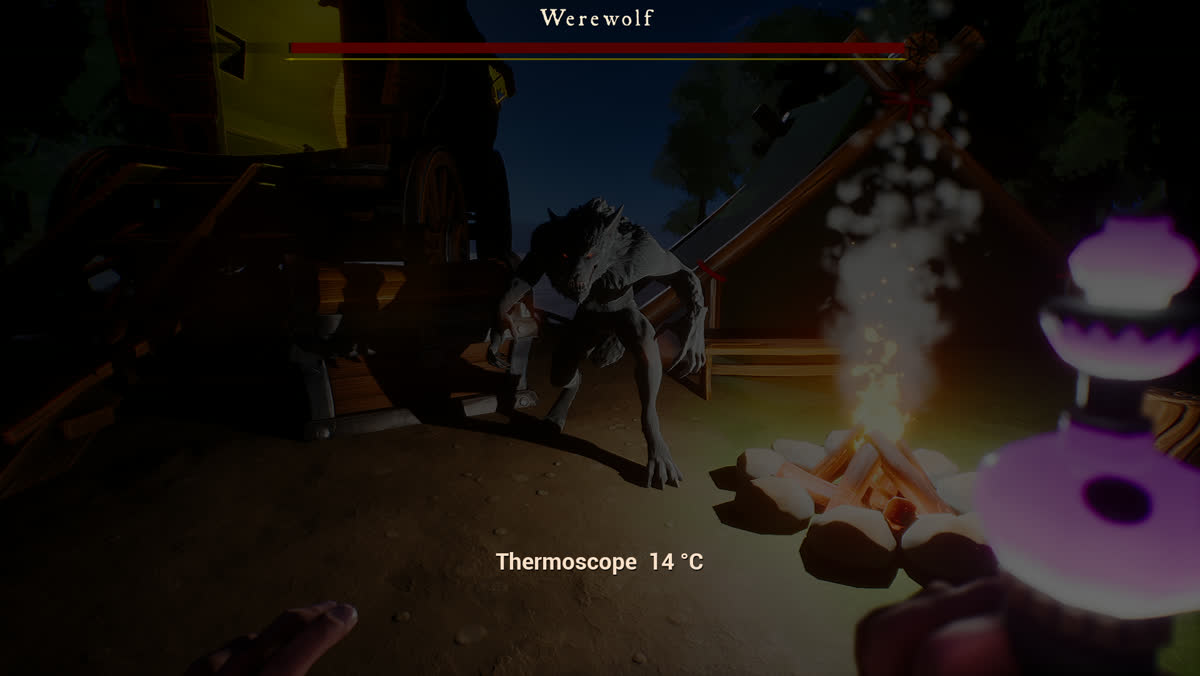
The crude one senses about eight metres out, with a few degrees of jitter and a slow-moving column. The graded one reaches fifteen metres and wobbles less. The master reads exactly, out to twenty-five. It is not a clue in the notebook sense, since it does not name a creature, but a cold reading in a warm wood tells you something is close, and what kind of something, before the horn does.
Making them and holding them
Tiers are crafted at the town's benches and gated by the building's level: level one for the crude grade, level two for the brass, level three for the master. Costs climb from wood and quartz through iron to silver, quartz and magic essence, which is why the forest now drops the resources it does: quartz and fire element from chests, claws, fangs, antlers and hides from what you kill. The crude tier of every tool is a recipe you always know. Everything above it comes from a blueprint you find.
We also spent a day on how tools sit in the hand. They are real meshes in the hunter's right hand now, with a raise pose when you use them, so the Looking Glass comes up to the eye, the vial comes up to the face, and the horn goes to the ear. The old setup left the hand at the hip and the tool off screen.
What's next
Tier looks are still placeholders in places: the tint tells the grades apart, but the per-tier meshes and icons are only partly in, and the horn's directional cue needs its own sound. The thermoscope wants a real instrument mesh instead of a bottle. And with resources now dropping, the next pass is on the benches themselves, so a town that has earned a level-three blacksmith feels like it.