November 11, 2026
Twenty-One Ways to Get Hit
The werewolf and the Wendigo now have a library of attacks: combos, a pounce, a ground slam, sweeps and charges. And a confession about the five bugs that hid every miss for hours.
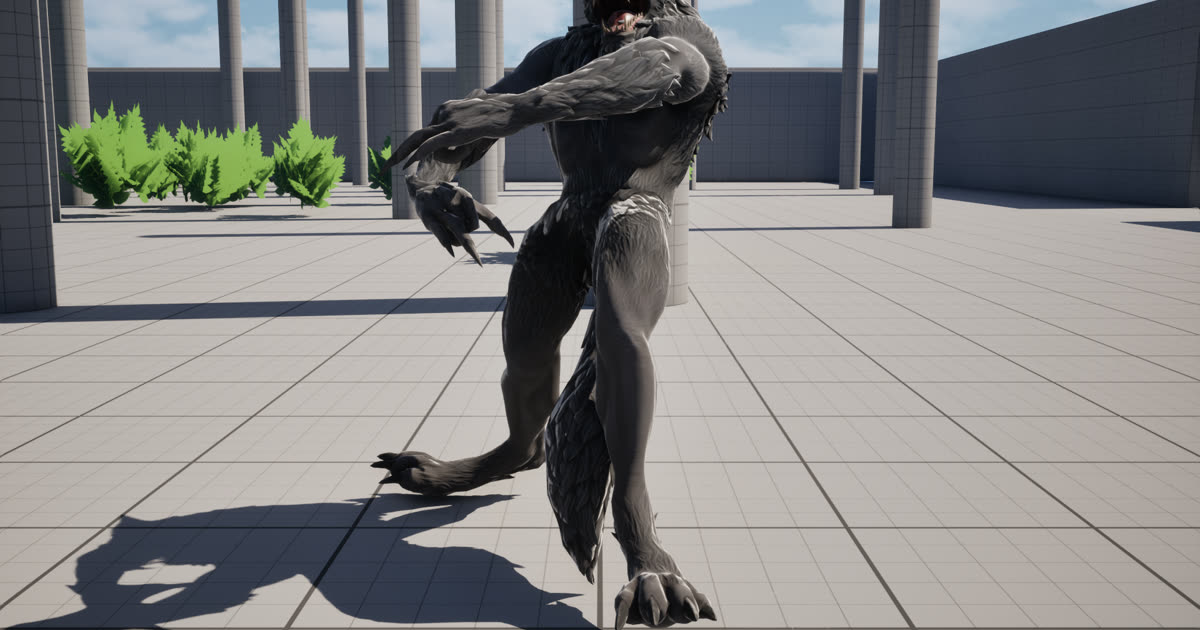
For most of the year each creature had one attack. The werewolf swiped. The Wendigo swiped with a different animation. You learned the timing once and the fight was solved. This sprint gave both of them a proper library, and gave us a much better understanding of why so many of their attacks had been missing.
The library
Seventy animations were retargeted onto the two creatures and cut into twenty-one attacks, each one a data asset the AI can pick from. The werewolf has a claw combo, a rending attack, a frenzy, a pounce that covers six or seven metres and lands on you, a ground slam with a burst around it, and a spinning whirl. The Wendigo has sweeps, a whirl of its own, a cleave, a heavy overhead, a slam, a charge and a dash strike that close distance, an uppercut, and three straight strikes. Each has its own reach, its own band of distances it will be chosen from, its own damage and its own weight in the picker.
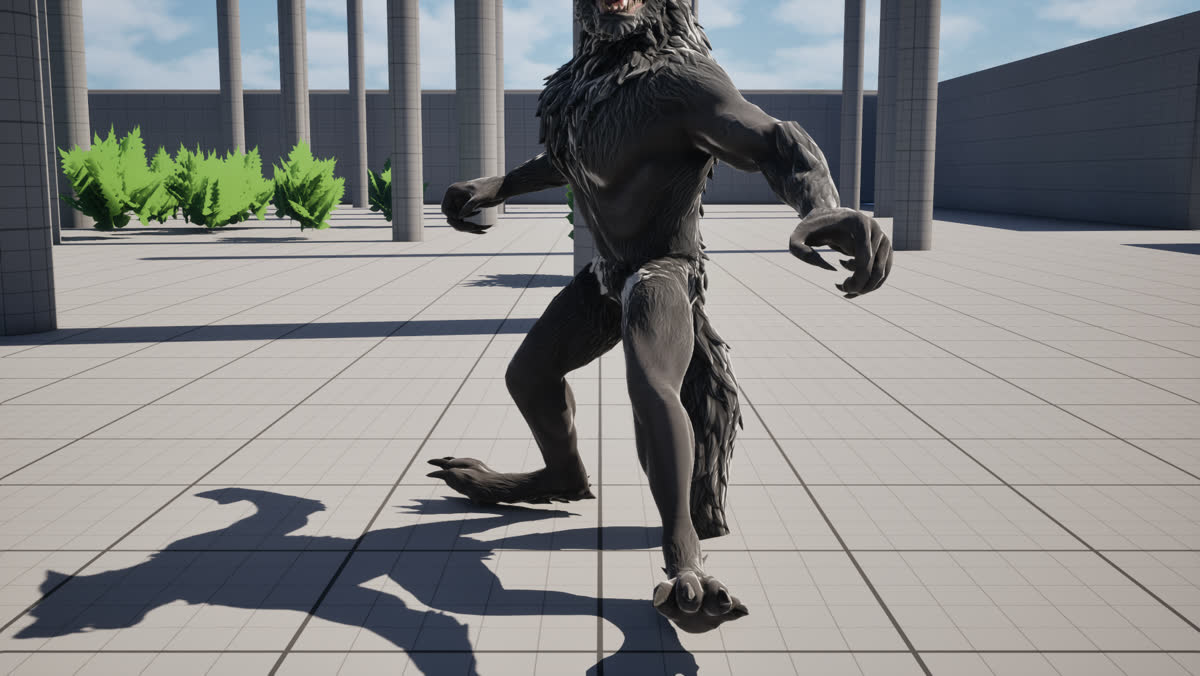
Alongside the attacks came the rest of the vocabulary: directional hit reactions, a stagger, a knockdown, a back-hop, roars, and deaths. The reaction side gets its own post on Thursday. This one is about the attacks, and about the afternoon we spent watching every one of them miss.
Five ways to miss
We built the library, put the werewolf in the test arena, and watched it swing through the hunter over and over without landing a hit. It took hours to find out why, because it was not one bug. It was five, stacked.
The first was the editor itself. When the editor window is not in the foreground it throttles to about three frames a second to save power, and our hit windows are two tenths of a second long. They were opening and closing inside a single frame, so the sweep never ran. Every combat log we had read that afternoon was from a throttled editor. The executor now sweeps once when a window opens and once when it closes as well, and we flip the throttle off before every test.
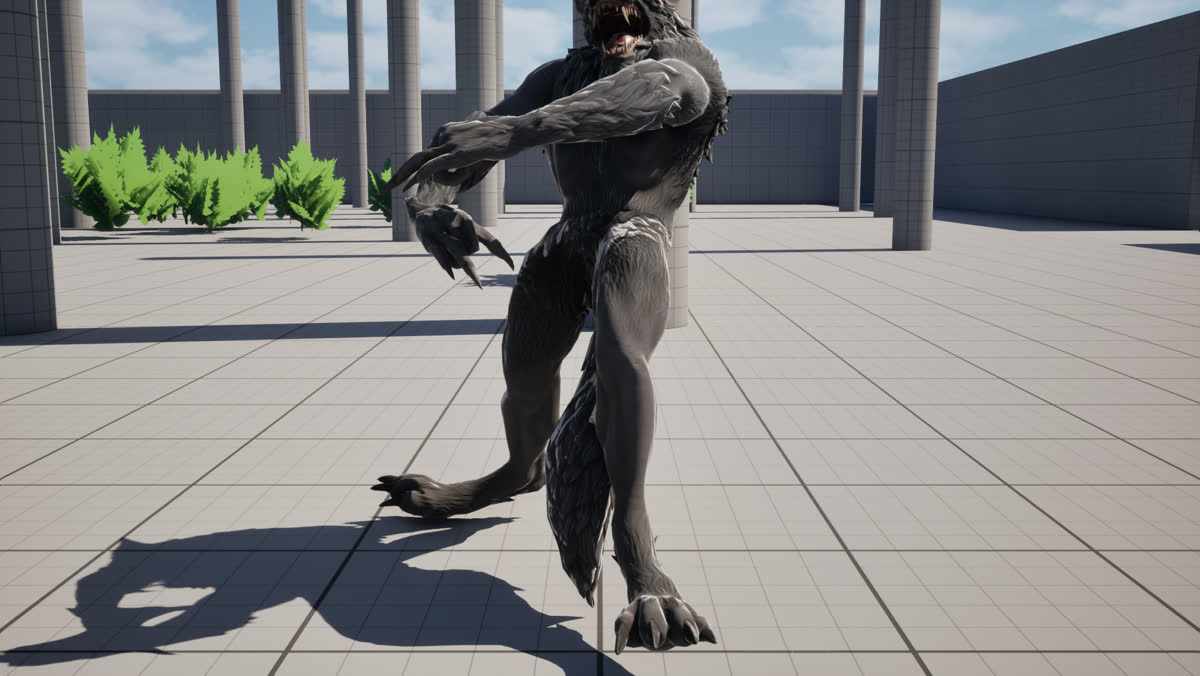
The second was geometry. Some attacks swept a capsule shorter than it was wide, which the physics engine treats as degenerate and answers with no hits at all. The third was a timer being cleared a line after it was set, so the pounce never launched. The fourth was root motion: the retargeted clips carried a tiny amount of it, enough for the movement system to override the leap every frame, so the pounce played its animation standing still. Root motion is now off on every clip and the executor moves the body itself.
The fifth was the subtle one. Each attack's distance band had been set from the swing's maximum reach, which for a claw includes the wind-up behind the creature's back. The AI attacks from the edge of the band, so it was starting swings at a distance only the wind-up could reach. Bands are now set from forward reach, measured and logged, which is around one to three metres for the werewolf's claws and five to seven for the Wendigo's long arms.
With all five fixed, in a single evening: the slam lands its double burst, the pounce leaps and connects, the claws hit, the werewolf walks in to its tightest band before it swings, and the picker gives a real variety of attacks. Two of the numbers are frankly too high, since a slam and a pounce can kill a standing hunter in half a minute, and tuning that down is the next job.
What's next
Reactions on Thursday: what happens to the creature when you hit it back. Then damage tuning, and then the things the library makes possible: creatures that jump, climb and crouch, and a dodge that reads your swing.